
Lubbock County Warrant Records
Lubbock County warrant records are managed by the Sheriff's Office and court clerks in the city of Lubbock, Texas. The county is the largest in the South Plains region and has multiple district courts that handle felony cases. The 72nd, 99th, 140th, 237th, and 364th Judicial District Courts all serve Lubbock County. Active warrants from these courts and the county courts are tracked by the Sheriff's Office. You can check for warrants by calling 806-775-1000 or visiting the courthouse. The County Clerk keeps misdemeanor records and the District Clerk stores felony files. Statewide search tools through the Texas DPS also pull up Lubbock County criminal records.
Lubbock County Overview
Lubbock County Sheriff Warrant Division
The Lubbock County Sheriff's Office runs the warrant division for the county. They maintain all active warrants from every court in Lubbock County. With five district courts and additional county courts, the volume of warrants here is much higher than in most West Texas counties. Call 806-775-1000 to check if there is an active warrant.
The warrant division tracks each warrant by name, charges, bond amount, and issuing court. Staff can tell you if a warrant is active, has been served, or was recalled. The Sheriff's Office also handles fugitive apprehension and coordinates with agencies across Texas and out of state for extradition. All warrant data in Lubbock County is public under Texas Government Code Chapter 552.
| Office | Lubbock County Sheriff's Office |
|---|---|
| Phone | 806-775-1000 |
| Hours | Monday through Friday, 8:00 AM to 5:00 PM |
| Website | co.lubbock.txsheriff.com |
Searching Lubbock County Warrant Records
There are several ways to search for warrant records in Lubbock County. The Sheriff's Office handles active warrant inquiries by phone or in person. For court case records, the clerk offices at the Lubbock County Courthouse are the place to go.
The Texas DPS criminal history portal covers all Texas counties including Lubbock. You pay a small fee and get a report that shows arrests, convictions, and any warrants on file with the state. The DPS Crime Records page gives you full instructions on running a search.
The Lubbock County District Clerk manages felony case files from the 72nd, 99th, 140th, 237th, and 364th District Courts. That is a lot of courts for one county. The County Clerk keeps misdemeanor records. Both offices let you search by defendant name, case number, or filing date. Standard copies cost $1.00 per page. Certified copies run more.
Note: Lubbock County has five district courts, so felony warrant records may be spread across multiple dockets.
Lubbock County Warrant Records and Legal Framework
Warrants in Lubbock County follow the same legal process as the rest of Texas. A judge must find probable cause before signing one. Chapter 15 of the Texas Code of Criminal Procedure sets the rules. The warrant names the person, describes the crime, and carries the magistrate's signature. Any peace officer in Texas can serve it once it goes active.
The Lubbock County District Attorney prosecutes felony cases. The office works with the Lubbock Police Department, the Sheriff's Office, and other agencies on investigations. They present cases to the grand jury and handle appeals. The County Attorney takes on Class A and B misdemeanor cases, juvenile matters, and represents the county in civil legal issues.
Criminal case records in Lubbock County include charging documents, plea agreements, trial transcripts, sentencing orders, and all motions filed during the case. The District Clerk keeps a full index. Certified copies are available for statutory fees. All of these records are tied to the warrant that started the case.
Lubbock County Constable and JP Court Records
Lubbock County has multiple constable precincts. Each one covers a part of the county. Constables serve warrants and civil process within their areas. The constable offices work alongside the Sheriff's Office to get warrants served.
The Justice of the Peace courts issue warrants for Class C misdemeanors. These cover traffic tickets, minor ordinance violations, and truancy cases. JP courts hold initial hearings and set bonds. Each precinct has a constable who serves the court's warrants and papers. In a county the size of Lubbock, the JP courts handle a large volume of minor cases.
Note: Residents of the city of Lubbock should also check with the Lubbock Police Department, which handles warrants within city limits.
State Databases for Lubbock County Warrant Searches
Texas state agencies keep records that tie back to Lubbock County cases. The Texas Department of Public Safety is the main one. Their crime records division tracks arrests and convictions from every county. The Texas Department of Criminal Justice has records on state inmates, including those from Lubbock County.
The Texas Judicial Branch manages the court system and has a directory of courts across the state. The Texas Attorney General handles open records guidance and can help when a public records request gets denied or delayed. Between the busy local offices in Lubbock and these state tools, most warrant records can be tracked down without too much trouble.
Lubbock County also processes cases that come from the Lubbock Police Department, Texas Tech University police, and other local agencies. All of those arrest records end up in the county court system. Warrants tied to those cases are tracked by the Sheriff's Office just like any other. If you are looking for a record and are not sure which agency made the arrest, start with the sheriff. They see all the warrants no matter which agency started the case. The clerk offices at the courthouse store the full case files once charges are filed.
The image below shows the DPS Crime Records information page, which explains how to run criminal history checks that include Lubbock County records.
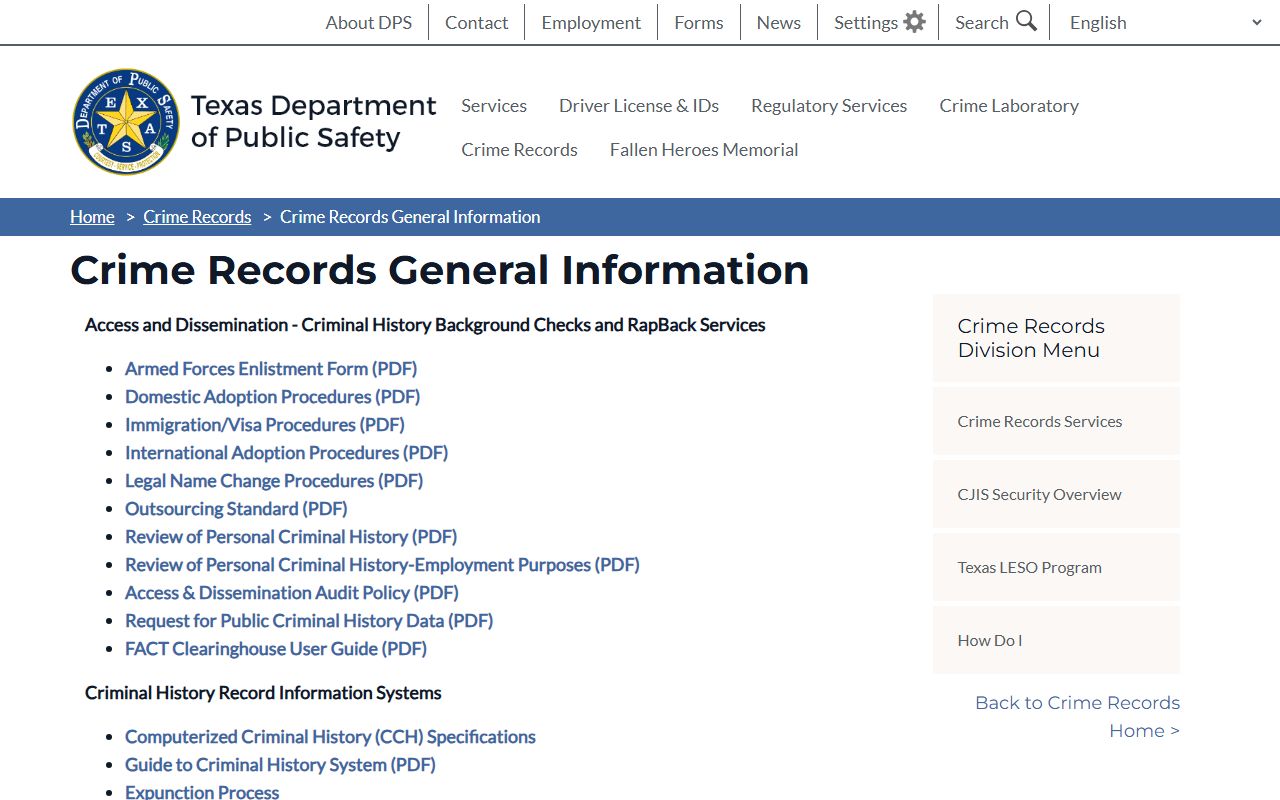
The DPS provides online and mail-in options for checking criminal records from Lubbock County and all other Texas counties.
Nearby Counties
These counties border Lubbock County. Check the county where the offense took place to find the right warrant records.