
Anderson County Warrant Records
Anderson County warrant records are kept by the Sheriff's Office and the court clerks in Palestine, Texas. The county uses two clerk offices to store criminal case files. The County Clerk holds misdemeanor case records, and the District Clerk keeps felony records. You can search for active warrants by calling the Sheriff's Office or going to the courthouse. Online tools from the state also let you check for criminal history and open warrants tied to Anderson County. Most records are public and can be pulled up by name or case number. The county sits in East Texas and has a long track record of making court data available to the public through its local offices.
Anderson County Overview
Anderson County Sheriff Warrant Division
The Anderson County Sheriff's Office runs the main warrant division for the county. All active warrants go through this office. They keep a list of open warrants and can tell you if one exists for a given name. You can call them at 753-780-4513 to ask about a warrant. Walk-ins are also welcome at 1200 E. Crockett St., Palestine, TX 75801, during normal work hours.
The Sheriff's Office works with the courts and other law enforcement to serve warrants. They also help agencies from other parts of Texas or out of state when a fugitive is in Anderson County. Warrant data usually shows the person's name, the charges, how much the bond is, and which court issued it. This is all public information under Texas Government Code Chapter 552, the state's open records law.
| Office | Anderson County Sheriff's Office |
|---|---|
| Address | 1200 E. Crockett St., Palestine, TX 75801 |
| Phone | 753-780-4513 |
| Hours | Monday through Friday, 8:00 AM to 5:00 PM |
| Website | co.anderson.tx.us |
Note: Call ahead to confirm hours since they can change on holidays.
How to Search Warrant Records in Anderson County
There are a few ways to look up warrant records in Anderson County. The most direct is to call the Sheriff's Office. Give them a full name and they can check the system. You can also go in person to the courthouse in Palestine and ask the clerk to pull up records.
The Texas Department of Public Safety runs a statewide criminal history search tool. You can use the DPS Crime Records portal to check if someone has a criminal record on file with the state. This search covers arrests and convictions from all Texas counties, including Anderson County. There is a small fee for the online check. The DPS Crime Records page has details on what you need to run a search.
For court-specific records, the Anderson County District Clerk keeps felony case files. You can search by defendant name or case number. The County Clerk stores misdemeanor records. Both offices are inside the courthouse at 1 Public Square, Palestine, TX 75801. They are open Monday through Friday from 8:00 AM to 5:00 PM.
Note: Felony warrant records and misdemeanor warrant records are stored in different clerk offices.
Anderson County Warrant Records and Court Files
Warrant records in Anderson County come from several courts. The District Court handles felony cases. These include serious crimes like assault, theft over a certain amount, and drug charges. The County Court deals with Class A and B misdemeanors. Justice of the Peace courts handle Class C cases like traffic offenses and minor code violations. Each court can issue its own warrants, and each has a clerk who keeps the case files.
Under Texas law, a judge must sign an arrest warrant based on probable cause. Chapter 15 of the Texas Code of Criminal Procedure lays out the rules for how warrants get issued and served. The warrant has to name the person, describe the offense, and be signed by a magistrate. Once the warrant is active, any peace officer in the state can serve it.
The District Attorney's Office in Anderson County works with law enforcement to build cases and present them to the grand jury. The DA handles felony prosecution. The office also has victim services for people with cases in the system. All of this work creates records that end up in the court files.
Constable Warrants in Anderson County
Anderson County has four constable precincts. Each one covers a different part of the county. Constables serve civil process and also execute criminal warrants within their area. They handle things like citations, subpoenas, and protective orders on top of warrant service.
The constable offices coordinate with the Sheriff's Office on warrant execution. If you need to know whether a warrant has been served in a specific precinct, you can contact the constable for that area. They keep records of all process served. This is a good option when you need to check on the status of a civil process or a minor criminal warrant within a certain part of the county.
Note: Each constable precinct covers a set geographic area within Anderson County.
Statewide Warrant Search Tools for Anderson County
Texas has several state-level tools that can help you find warrant records tied to Anderson County. The Texas Department of Public Safety is the main agency for criminal records at the state level. Their online portal lets you run a name-based search for criminal history, which can show warrants and arrests.
The Texas Department of Criminal Justice keeps records on people who are or were in the state prison system. If someone from Anderson County went to prison, their records are in this database. The Office of Court Administration oversees the court system statewide and can point you to the right court records. The Texas Attorney General's Office also handles certain public records requests and victim notification programs.
These tools are useful when you are not sure which county a warrant came from. They pull from a statewide pool of data. For records specific to Anderson County, the local offices in Palestine are still the best bet. But the state systems give you a wider view. Copies of documents cost $1.00 per page for standard copies at most clerk offices, with certified copies running a bit more.
Anderson County Court Structure
The court system in Anderson County has several levels. At the top is the District Court, which hears felony cases and major civil matters. The District Clerk handles all the files for this court. Below that, the County Court at Law deals with misdemeanors and some civil cases. The County Clerk manages these records.
Justice of the Peace courts sit at the bottom. They take care of Class C misdemeanors, small claims, and some administrative tasks. JP courts can issue arrest warrants for minor offenses and hold initial hearings. Each JP precinct has its own constable who serves warrants and civil papers. This layered system means warrant records can be spread across multiple offices. If you are not sure where to look, start with the Sheriff's Office since they track all active warrants from every court in the county.
The District Clerk's office is the one to call for felony warrant records. They keep everything from the indictment through the final ruling. You can search by defendant name, case number, or attorney of record. Certified copies of court records are available for a fee set by state statute.
Nearby Counties
These counties border Anderson County. If you are unsure which county holds the warrant you need, check where the offense took place. Warrants are filed in the county where the charge was brought.
The screenshot below shows the Anderson County official website, which serves as the main portal for accessing county government services and court information.

From this site you can find links to the County Clerk, District Clerk, and other offices that handle warrant records in Anderson County.
The Anderson County Clerk's page provides information on misdemeanor court records and public document access.
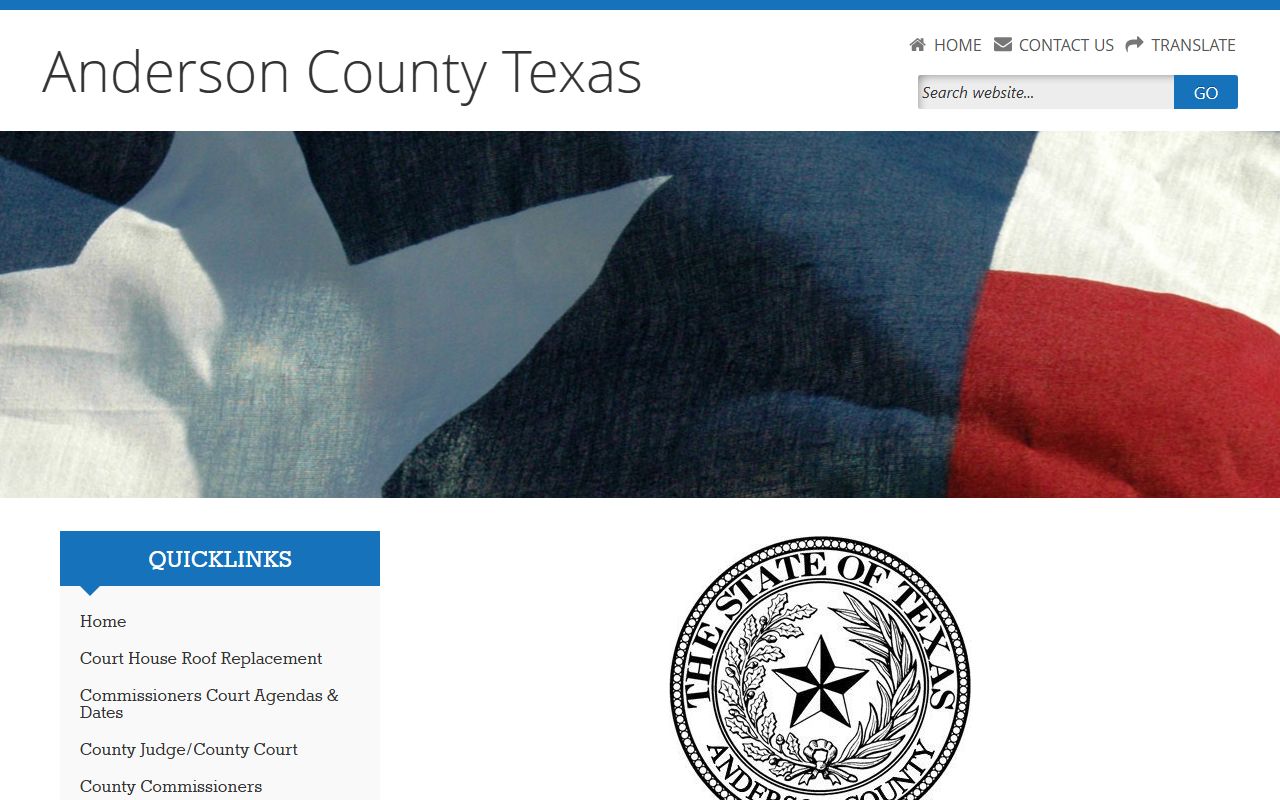
The County Clerk maintains misdemeanor criminal case files and can help you look up records by name or case number.
Below is a view of the Anderson County District Clerk's page for felony criminal records.
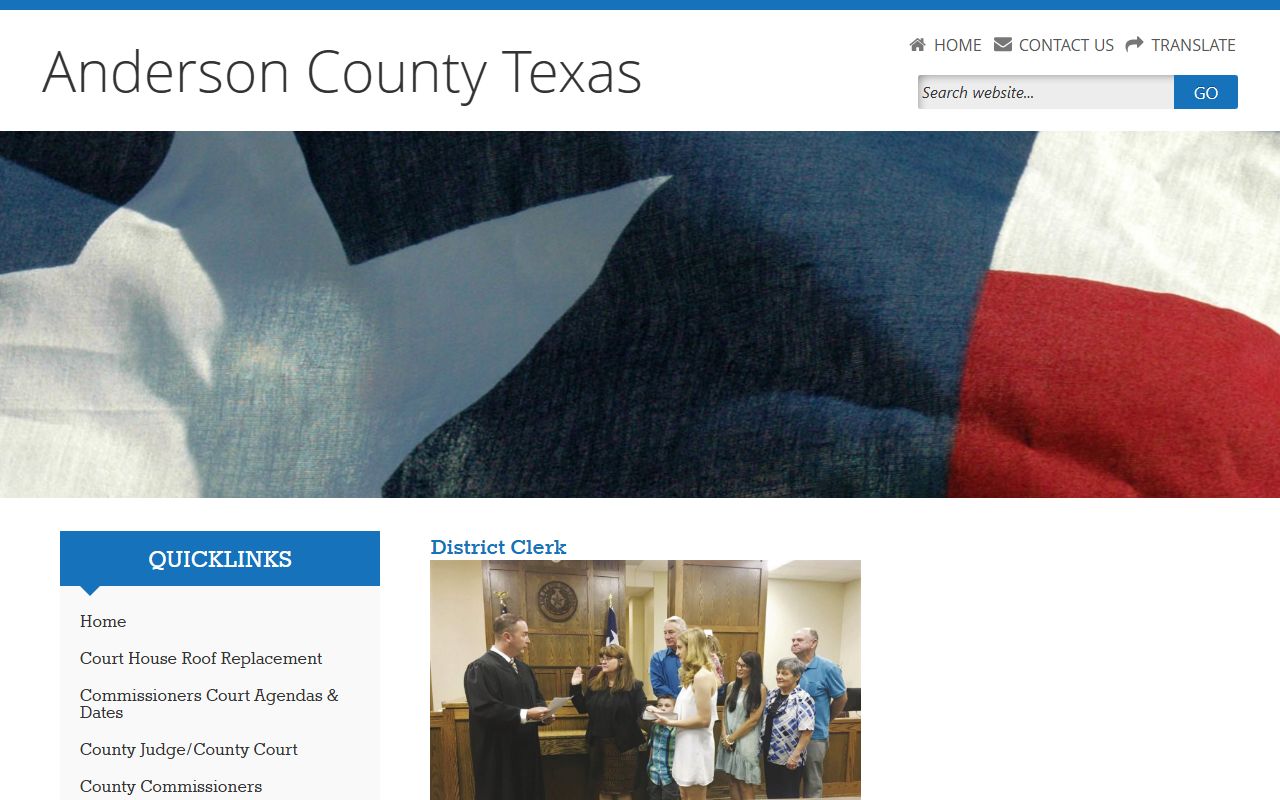
The District Clerk handles all felony cases and stores records from indictment through disposition.